
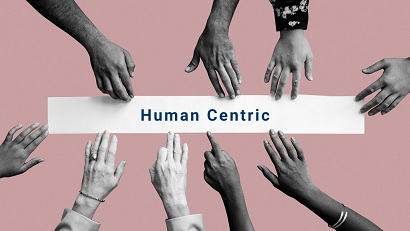
However, in the near past, the foundation of marketing strategy was practically all about numbers impressions, clicks, conversions, and reach. Although such measures remain important, the interaction between the audiences and the brands has evolved radically. Individuals no longer desire to be considered a part within a data chart. They would also like to see that brands know them, address their needs and provide real value.
This change has resulted in the emergence of human-centered marketing which does not emphasize on sales but rather on creating purposeful relationships with actual individuals.
The reasons why audiences are responding differently nowadays
The current consumers are bombarded with thousands of adverts on a daily basis. It is due to this overload that the traditional marketing messages have been seen to have formed a natural resistance amongst many people. They scroll over violent advertisements, unread promotional emails, and walk over sponsored content that seems to be too salesy.
Instead, though, they react to brands that talk like people and not like companies.
The interaction would undergo a de-escalation to less marketing and more of a conversation when companies exchange helpful information, share familiar stories, or discuss an actual issue their followers are struggling with.
This shift in viewers behavior is why most of the contemporary brands are shifting to human oriented communication.
Listening Before Speaking
Listening is one of the fundamentals of human-centered marketing. Successful brands do not rush to initiate campaigns that have been based on mere assumptions; they take time to know their audience.
They monitor the discussion in the online circles, pay attention to the feedback of the customers, and examine the frequent questions, which are asked. The insights can enable brands to develop content that realistically addresses real issues instead of generic messages.
Interestingly, those corporations that practice listening have found that their best marketing concepts are those that come out of what their audience talks about.
Narration that is Based on Real-life Incidents
The other significant element of human-centered marketing is storytelling. The audiences relate much better to the stories than a refined promotional language.
An illustration of this is when a brand describes how it resolved the problem of a customer and this is more captivating than just enumerating the product features. Stories make people have a visualization of possibilities and how a product or service can fit into the real world.
Most prosperous organizations currently focus on backstage scenes, customer experiences, or lessons gained in the course of their development. This openness helps the brand to be more friendly and natural.
Constructing Community, not Just Reach
Traditional marketing emphasized a lot on the number of people that should be reached. Human oriented approaches are slightly different. Brands are no longer attempting to reach large audiences but instead are working to provide communities within which it is authentic that people desire to be a part of.
This may include comment interaction, facilitating discussions, answering questions or stimulating user-created content. Once the audience is listening to them and feeling valued, they will be much more inclined to be supportive of the brand.
Other firms rely on niche platforms that assist in social reach expansion so that their content and community campaigns can reach more people without it seeming impersonal, which makes them work well.
The asset of trust becomes the most valuable
On the very basis, human-focused marketing is a matter of trust. When individuals feel that a brand is concerned about their needs, they will tend to keep on following its content, refer their friends to the brand, and ultimately become its loyal customers.
One campaign does not build trust. It will develop over time because of the constant communication, supportive information, and truthful interaction.
Successful brands that use this strategy tend to enjoy greater involvement and interaction with their audience.
Marketing That Feels Human Again
With automation and the production of endless content prevalent in a digital world, a consumer is more likely to value a brand that is more human in marketing.
People-focused tactics help companies to keep in mind that behind each click, comment, and share, there is a living person with its interests, concerns, and expectations.
Once the brands are interested in getting to know those people, they will no longer feel that they are being manipulated but will feel connected. And in the current competitive world, such a connection is usually the strongest asset that a brand can possess.